










 Find us
 Contact Us
 My account

The 2008 DKR
15 April 2014
The muscular, thoroughbred yet beastlike forms of the Peugeot 2008 DKR provide a vivid indication of the new car’s serious desire for success. It is behind the wheel of this purpose-designed machine that Carlos Sainz and Cyril Despres will defend the colours of Team Peugeot Total on next January’s Dakar.
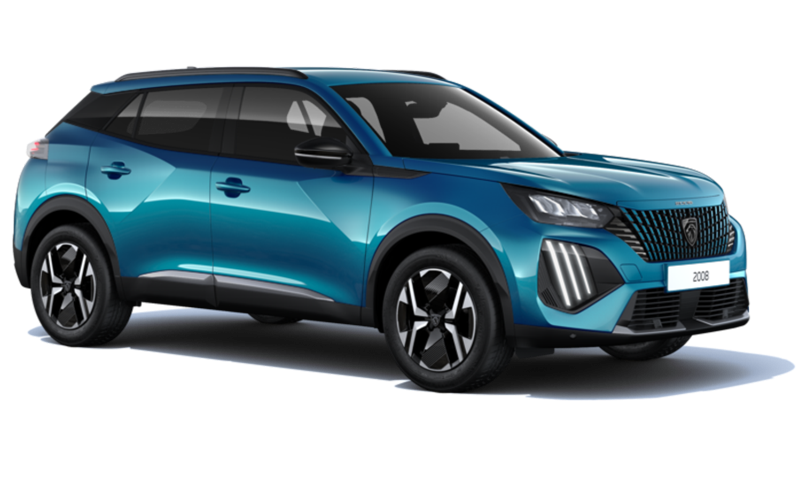
Three weeks after the exciting news that Peugeot, Red Bull and Total have decided to join forces to contest the 2015 Dakar, the car that will spearhead the team’s challenge has finally broken cover. The 2008 DKR shares an unmistakable family resemblance with Peugeot’s road-going crossover, albeit with more muscular forms and more imposing overall proportions that have been honed to meet the challenge that lays ahead. Its spectacular lines are the fruit of close cooperation between the experts at Peugeot’s Style Centre and their colleagues at Peugeot Sport’s Design Department, and the newcomer’s likeness with the production version is quite astonishing!
Far more than just another styling exercise, the 2008 DKR features an aggressive stance dictated by the technical constraints associated with its mission. “We provided Peugeot’s Style Centre with a very precise brief,” explains the Project Leader at Peugeot Sport, Jean-Christophe Pailler. “We supplied them with the basic key dimensions, as well as other information such as the cabin space we required, plus the wheel size and the suspension travel. They also had aerodynamic data resulting from our early simulation work.”
Indeed, Peugeot Sport’s design team had to answer one particularly fundamental question at a very early stage concerning the new beast’s transmission: four-wheel or two-wheel drive? The decision effectively influenced the car’s design in two key areas: “We carried out an in-depth analysis of what already existed in the world of cross-country rallying and weighed up the benefits of the different solutions. In the end, we opted for an approach that was quite different to that of the competition. Given the off-road capability of two-wheel drive transmission and its ability to run on sand, that’s the choice we ultimately went for. It enabled us to fit bigger wheels and also to benefit from more suspension travel.” The 2008 DKR consequently sits on 37-inch diameter Michelin tyres (almost 94cm)!
These considerations naturally had a significant knock-on effect with regard to the work of Peugeot’s stylists, but the four-strong design team rose enthusiastically to the challenge to pen the new Lion that will very soon take on the unique challenges posed by cross-country rallying.
“The chief difficulty resided inadapting the model’s styling cues to the different technical constraints dictated by the hostile terrains visited by the discipline,” notes Giovanni Rizzo, the 2008’s exterior designer. “There were two ways we could have approached this task: either by taking a standard 2008 and grafting on bespoke parts, or else by drawing inspiration from the 2008’s defining overall forms to design a car that covered the constraints inherent in its mission. We eventually decided to go down the second path to produce a fresh take on the 2008! For example, the 2008 DKR doesn’t have rear doors, so it’s more like what a coupé version of the model might be.”
Carrying over the road car’s styling cues to the rear of the new Dakar challenger turned out to be relatively straightforward, but the front proved more taxing for the design team, as Michaël Trouvé, Peugeot Design Manager, relates: “Due to the off-road capability needed, the approach angle had to be very high. This meant a very short overhang, which in turn resulted in a front-end design that was quite different to that of the production version. Happily, the technical team didn’t hesitate to listen to our arguments and accepted to reposition certain parts which could have been a problem for us. That gave us a little freedom to design a front end that resembled the look of the road car as closely as possible.”
Between September 2013 and January 2014, it was this close working relationship that inspired the 2008 DKR’s spectacular final design which represents a move away from the cues traditionally associated with cross-country rallying. Having already contested the Dakar seven times in the colours of Red Bull, in both two-wheel and four-wheel drive cars, Carlos Sainz is perfectly aware of the technical constraints that go hand-in-hand with the exacting South American stages, and he was immediately won over by the new car’s design. “The philosophy behind the 2008 DKR marks a radical break and packs a high number of new ideas,” remarks the Spaniard. “The end result is like no other two-wheel drive car. It is very compact and that’s good. Having done the last two Dakars in a two-wheel drive car, I am convinced it is a solution that can win the event. Okay, it calls for a carefully-designed car which is at ease on all the different types of terrain visited by the event, but I know that Peugeot Sport has the necessary expertise, technology and means to pull off what is a unique and stimulating challenge for everyone in the team.”
What lies beneath the bodywork remains a secret for the moment, but the 2008 DKR’s breath-taking forms are sure to cause a stir even before the new car starts to kick up dust as it begins to be put through its paces in the colours of Red Bull and Total.