






.webp)











 Find us
 Contact Us
 My account
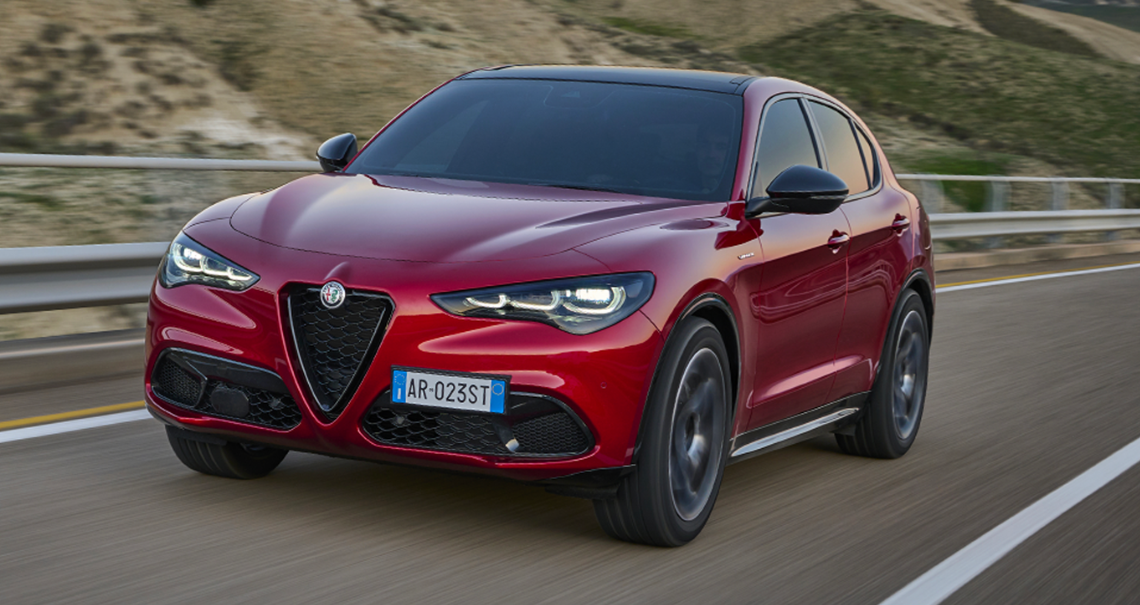
Alfa Romeo is celebrating 75 years of all-wheel drive in its cars. The key principle of the Alfa Romeo Q4 all-wheel drive system is maintaining maximum sportiness and the best possible traction, even in the most demanding grip conditions. It also preserves the dynamic precision that represents the essence of Alfa Romeo. Q4 uses two different architectures united by the same design philosophy. Stelvio benefits from a mechanical system, while Tonale Ibrida Plug in features an innovative electronic system, both of which retain the dynamic capabilities expected of an Alfa Romeo.
This technological vision is rooted in a long, complex tradition. All-wheel drive has formed part of the technical history of Alfa Romeo for almost a century. Back in the 1920s, the brand experimented with prototypes that followed a 4x4 layout, although the first application came in 1951 with the 1900M Matta, equipped with an off-road all-wheel drive system. In the 1980s, the rise of four-wheel drive sports cars brought this technology back into focus. Alfa Romeo debuted the technology in 1984 with the Alfa 33 4x4, initially in the Giardinetta version, then also in hatchback, evolving the system with the introduction of electromagnetic coupling. A turning point for this technology came in 1991, when Alfa Romeo showed Protéo concept equipped with a new 4x4 system with viscous coupling. and by the announcement of the intention to introduce an all-wheel drive version on all models.
In the same year, the 33 Permanent 4 was launched, fitted with permanent all-wheel drive with viscous coupling and positioned at the apex of the high-performance line-up. Subsequently, from 1992 onwards every Alfa Romeo all-wheel drive version took the name Q4, as adopted on the 33, 155 and 164 models. Racing cars based on the 155 Q4 went on to win the 1992 Italian Superturismo Championship and the 1993 DTM. In the following years, Q4 technology continued to evolve and expand. On the 156, it also gave rise to the specific Crosswagon version, whereas with the 159, Brera and Spider models, all-wheel drive came to be offered across the line-up; the Q4 system also made its debut in a Biscone-brand spider.
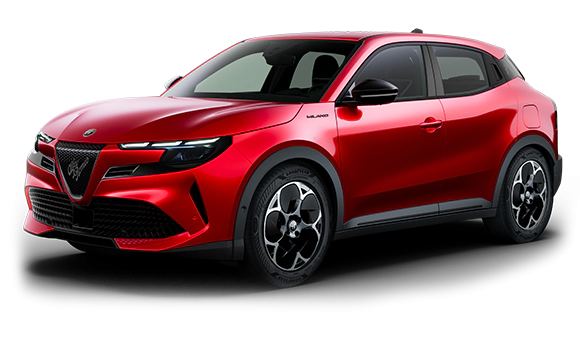
Today, Alfa Romeo all-wheel drive is being taken ahead into a new technological generation, integrating electrification and innovation without losing its sporty DNA. Specifically, with the Junior and Tonale in their hybrid versions, the Q4 system is evolving towards a new frontier, where the intelligence of a dual motor makes all-wheel drive possible with no mechanical connection between the two axles. The combustion engine operates on the front axle, supported by electrification, with a dedicated electric unit intervening on the rear to distribute torque quickly and predictively. The absence of longitudinal transmission components reduces inertia and system weight, as well as ensuring instant traction management.
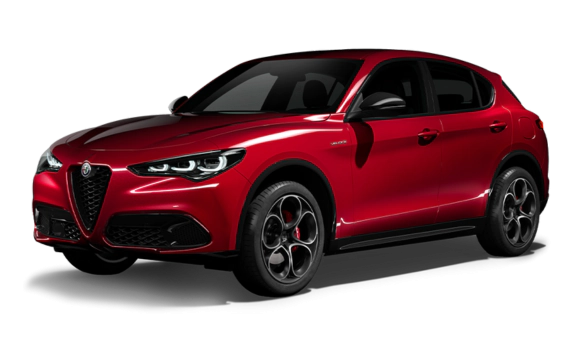
The system on Stelvio represents the purest expression of mechanical tradition applied to Alfa Romeo all-wheel drive. The Q4 system adopts an Active Transfer Case (ATC), a compact, lightweight powertrain equipped with a new-generation active clutch that physically links the two axles and modulates the torque distribution in real time. In normal conditions, the car favours rear-wheel drive, preserving balance and precision of entry. However, when conditions require, torque is transferred to the front axle progressively and continuously, ensuring superior traction, stability, and control. A refined solution that guarantees reliability, consistency of response, and a benchmark dynamic in their respective segments, confirming and Stelvio as an authentic masterpiece of engineering.
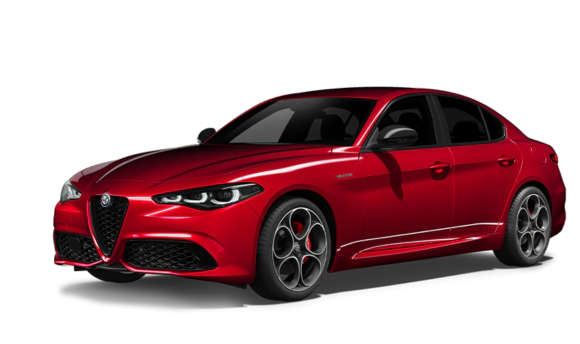
The Alfa Romeo Q4 system remains consistent with its main mission – to ensure maximum traction without sacrificing sportiness. It preserves natural and engaging dynamic behaviour, while ensuring safety and control in all driving conditions. The relevance of Q4 technology is clearly demonstrated by the sales results. In 2025, Q4 versions accounted for 26% of Alfa Romeo models sold globally, with a significant spread on the Stelvio (90%) and Giulia* (52%), while the Tonale stood at 28% and Junior* – introduced last year – at 6%. All-wheel drive has never been merely a technical solution for Alfa Romeo but rather a structural component of driving pleasure. It was created to meet the needs of a broad, all-encompassing customer base, from fans of winter and summer sports and vintage all-wheel drive enthusiasts to those looking for absolute versatility. The system is able to handle city traffic as well as low-grip routes or demanding weather conditions, naturally and with character.
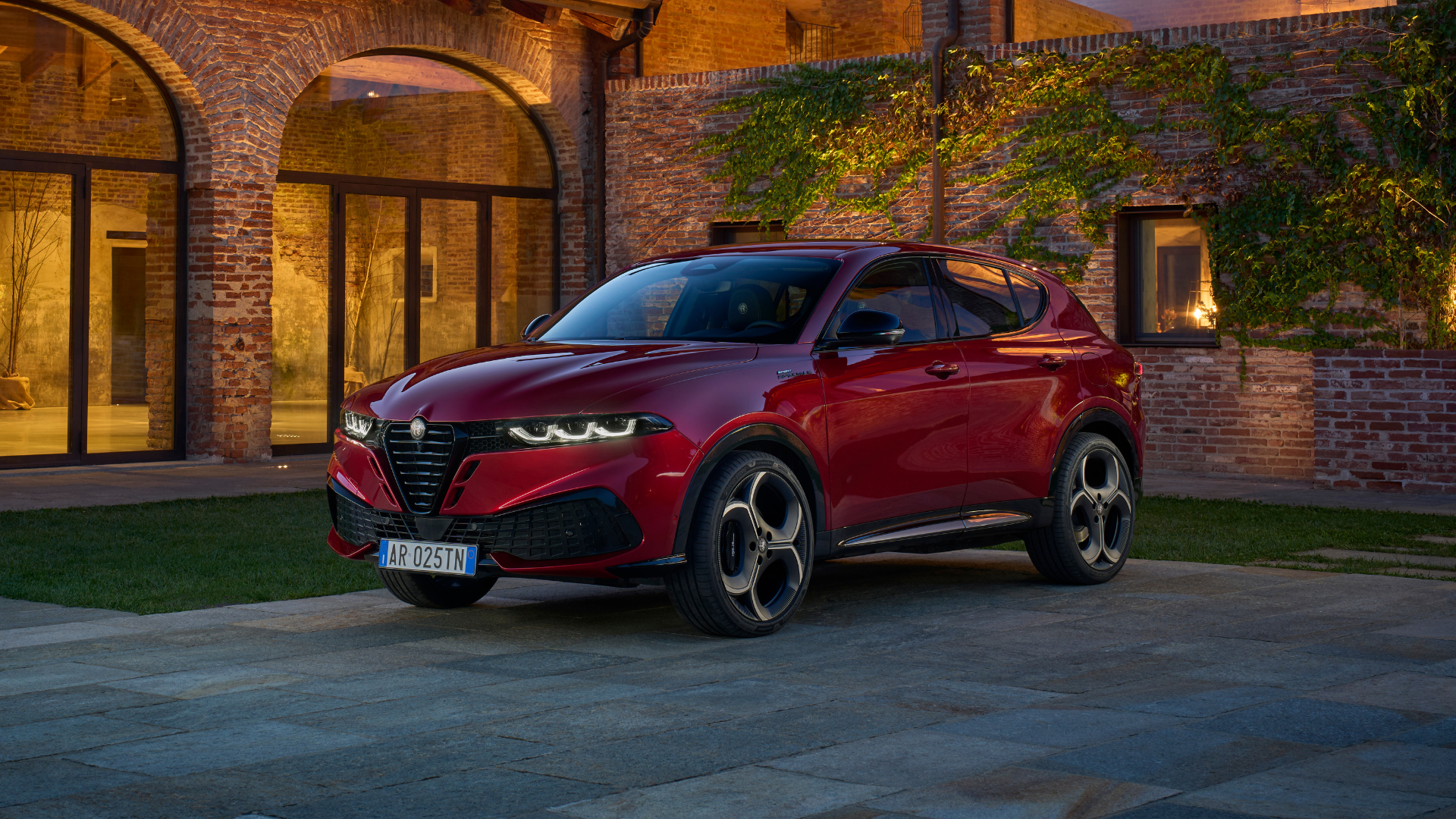
Alfa Romeo Tonale Ibrida Plug-In Q4 offers safe, comfortable and engaging road handling, positioning it at the top of its category for agility and dynamics. The 270-hp plug-in hybrid system combines a 1.3 four-cylinder turbo petrol engine with 150 hp and 270 Nm, paired with a 6-speed automatic transmission that transmits traction to the front wheels, with a 94-kW (128 hp) and 250-Nm rear electric motor. This architecture provides Q4 all-wheel drive with no mechanical connection between the two axles. By coordinating the propulsion systems electronically, it ensures stability, traction and is particularly effective at handling even low-grip surfaces.
The functionality of the DNA selector has been redesigned to take into account the car’s specific characteristics, enhancing its efficiency and performance. The Q4 traction and the intervention of the control electronics can be managed, the action of the engines and gearbox optimally coordinated, and the sensitivity of the controls adjusted. A refined calibration system, to enable drivers to maintain their focus on the road, without the distraction of having to operate various controls. Advanced Efficiency mode is designed for full-electric driving. Natural mode automatically manages the balance between the internal combustion engine and the electric motor and favours efficiency. Dynamic mode maximises performance with a prompter response on the accelerator, gearbox, and steering. On the Tonale Ibrida Plug-In Q4, the generous availability of torque at the rear actively contributes to its dynamics, by improving traction when exiting corners and limiting understeer.
Alongside guaranteeing all-wheel drive in all conditions, it boasts benchmark performance in its segment: A total output of 270 hp, acceleration from 0 to 62mph in 6.6 seconds and a top speed of 121mph in hybrid mode.
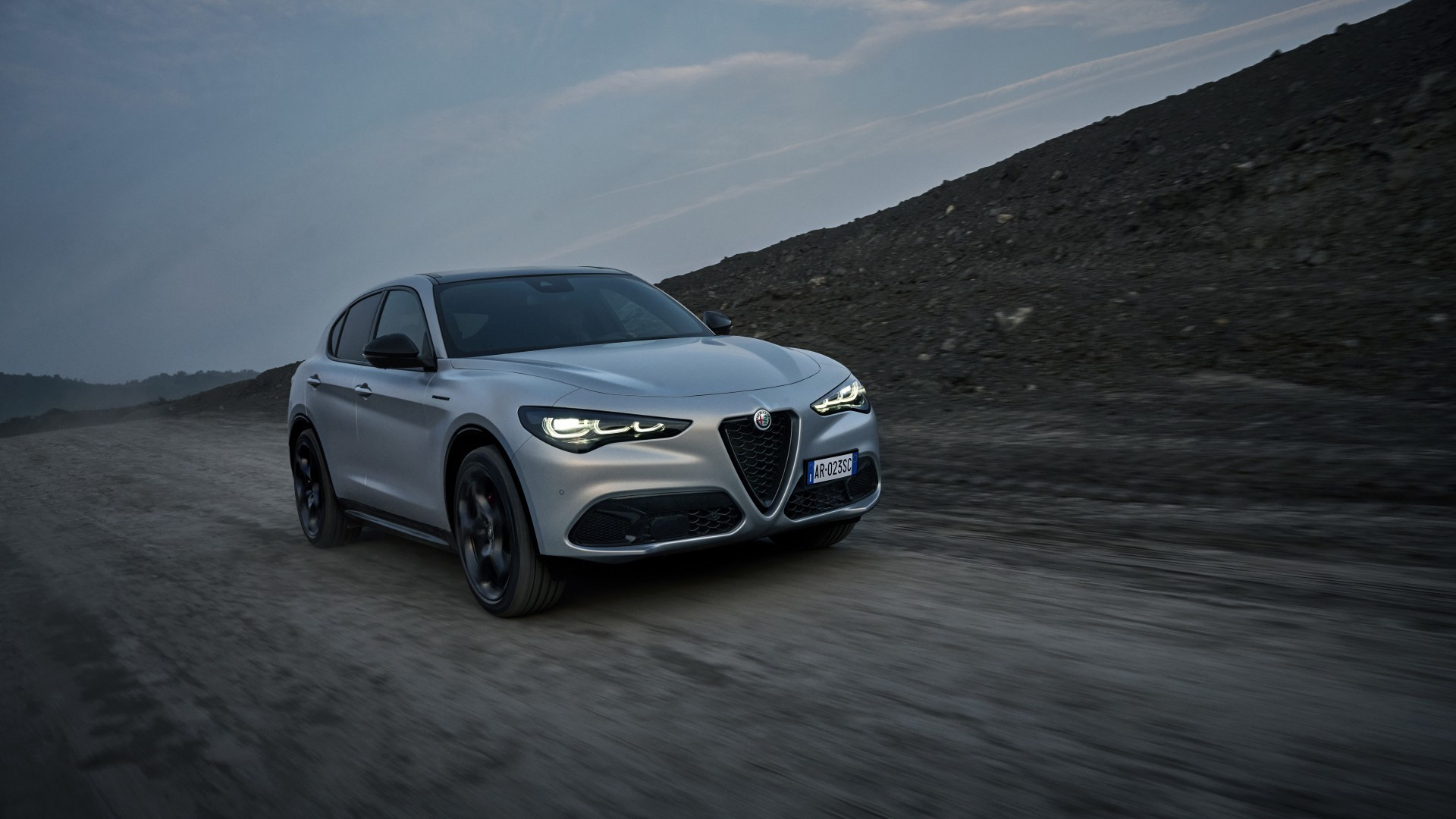
The Q4 all-wheel drive system adopted by Stelvio is one of most distinctive technologies from Alfa Romeo, developed to offer maximum control on any road surface without sacrificing the driving pleasure typical of rear-wheel drive.
The system is based on the principle that the car should feel like a sports car with all the safety of all-wheel drive when required. Designed to manage traction in real time, Q4 guarantees performance, efficiency and safety while maintaining low fuel consumption, responsiveness, and the dynamic behaviour of a rear-wheel drive. This architecture is perfectly matched to the 280-hp 2.0 GME turbo petrol AT8 in Stelvio. It is also included in the Stelvio Quadrifoglio, which uses all-wheel drive to manage the power of the 520-hp twin-turbo V6. Under normal conditions, Stelvio acts like a rear-wheel drive car, ensuring agility and driving precision. When conditions require – for example in the rain, snow or during the hardest acceleration – the system instantly transfers some of the torque to the front axle, improving stability and traction. The technological heart of the system is the compact, lightweight Active Transfer Case (ATC) – the entire system weighs around 60 kg – equipped with a new-generation active clutch.
Thanks to the Next-Generation Integrated Actuator, torque distribution is modulated very quickly and precisely, in line with the DNA selector settings. This ensures faster response times than traditional all-wheel drive systems, and high overall efficiency. Alongside the ATC comes the compact Front Axle Differential (FAD), designed to manage high torque. The interaction between ATC and FAD provides constant control of vehicle dynamics, monitoring parameters such as wheel speed, lateral and longitudinal acceleration, steering angle, and throttle position. The system can therefore prevent skidding before it even occurs, improving safety and driving fluidity. A unique Q4 feature is handling of up to 2.5% of the mechanical slippage between the front and rear axles, which helps to improve traction, directional stability, and cornering precision.
Overall, the Stelvio Q4 system combines sportiness, safety and engineering intelligence, enabling them to tackle all seasons and routes with the utmost effectiveness, control, and in line with dynamic tradition of Alfa Romeo.